Resources and Frequently Asked Questions
ABOUT THE PROJECT
1. What is the Bonita Estero Rail Trail (BERT)?
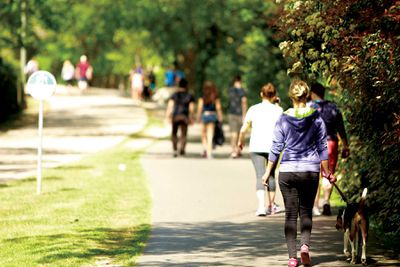
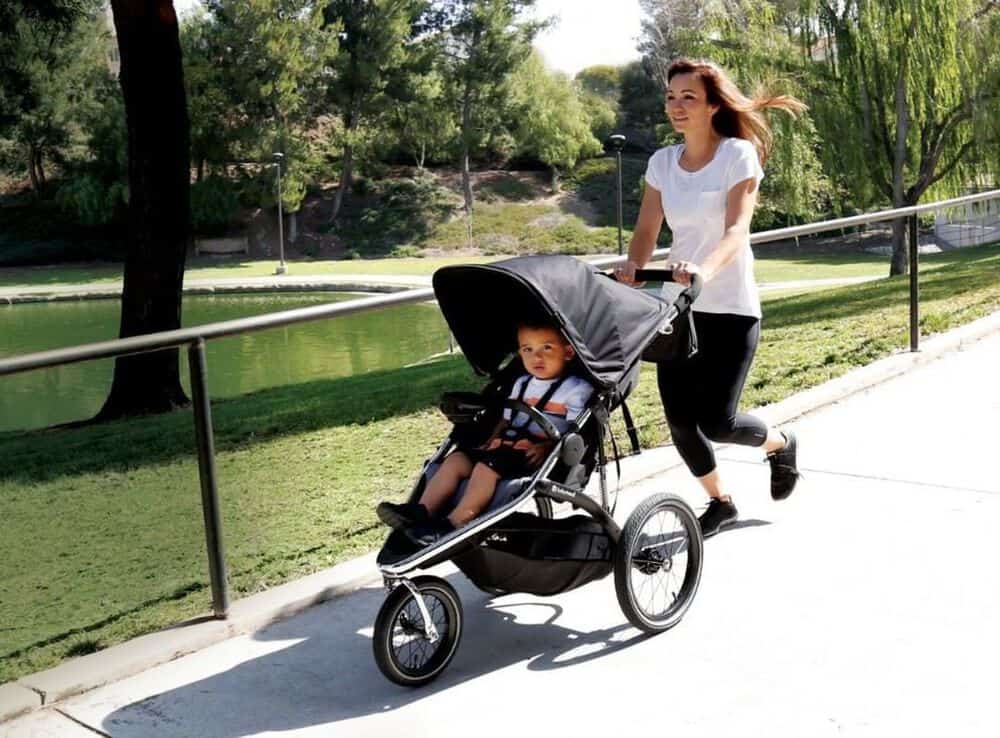
BERT is a greenway with a connected multi-use shared-use path that would convert the former Seminole Gulf Railway corridor into a paved trail for walking, biking, running, and rolling.
The corridor is approximately 11.4 miles and 130 feet wide from Wiggins Pass Road in Collier County to Estero Parkway in Lee County. It runs through Naples (1.5 miles), City of Bonita Springs (5.8 miles), and Village of Estero (4.1 miles).
2. What is a rail trail?
A rail trail is a public recreational and transportation path created from a former railroad corridor. Rail corridors are ideal because they are:
- Continuous and linear
- Wide enough for safe separation
- Already graded and engineered
A nearby example is the Legacy Trail in Sarasota County.
3. Who is Friends of BERT?
Friends of BERT is an all-volunteer 501(c)(3) nonprofit organization that:
- Educates the community
- Builds public awareness
- Supports preservation of the corridor
- Encourages thoughtful planning
- Assists with fundraising for readiness and acceleration
Friends of BERT does not negotiate land purchases or make government funding decisions.
4. Who owns the rail corridor?
The corridor is currently owned by Seminole Gulf Railway.
If acquired, ownership would transfer to public entities for long-term community use.
5. Who is responsible for planning?
Planning for the greenway is done through a Task Force with a Memorandum of Agreement comprised of City of Bonita Springs, Collier County, and Village of Estero. Trust for Public Lands and Friends of BERT are also represented in the Task Force.
Local governments ultimately determine land acquisition and development decisions.
6. What was the reason for the new recent negotiation?
The original $70.2 million agreement with Seminole Gulf Railway was set to expire in March 2026.
Through collaborative negotiations led by Trust for Public Land and supported by local governments, a revised agreement has reduced the purchase price to $60 million.
Approvals of the purchase and sale agreement by all three jurisdiction in March and April 2026, with closing projected for October 2026.
SAFETY QUESTIONS
7. Why is pedestrian and bicycle safety an issue in Lee County?
Recent Lee County data shows:
2024 Crash Data
- 371 pedestrian crashes
- 21 pedestrian fatalities
- 334 bicycle crashes
- 9 bicycle fatalities
These numbers demonstrate that roadway safety remains a significant concern for all users — especially pedestrians and cyclists.
8. How would BERT improve safety?
Separated infrastructure reduces direct interaction between vehicles and vulnerable users.
Benefits include:
- Dedicated space away from traffic
- Reduced conflict points
- Safer crossings
- Predictable user patterns
Communities nationwide show lower injury risk where protected paths exist.
9. Does building a trail increase crime?
Research from communities across the country shows that well-designed, maintained trails do not increase crime.
In many cases:
- Increased activity improves visibility
- Public use deters nuisance activity
- Regular maintenance enhances security
Design elements such as lighting (where appropriate), sightlines, and law enforcement coordination support safety and will be an integral part of planning.
10. What about safety near neighborhoods?
Studies across the U.S. consistently show that homes adjacent to trails often maintain or increase value, with no consistent evidence of increased crime.
Consideration will be given to the following in the design phase:
- Landscaping buffers
- Access management
- Clear visibility
HEALTH & QUALITY OF LIFE
11. How does BERT support health?
Trails provide:
- Safe space for walking and biking
- Support for active aging
- Opportunities for daily physical activity
- Mental health benefits from outdoor recreation
Communities with accessible trails often see increased levels of physical activity.
12. Who benefits from the trail?
- Families
- Children learning to ride bikes
- Seniors
- Commuters
- People with limited mobility
- Visitors
- Local businesses
ENVIRONMENTAL QUESTIONS
13. How does BERT support environmental goals?
The corridor is approximately 180 acres of continuous green space.
Trail conversion would:
- Preserve open space
- Remove aging railroad ties
- Allow native landscaping
- Improve stormwater management
- Encourage non-vehicle transportation
14. Would the trail harm wildlife?
Environmental review is part of the planning process. Trails often include habitat-sensitive design and native vegetation restoration.
Preserving the corridor prevents fragmented or incompatible development.
ECONOMIC QUESTIONS
15. How does a trail impact property values?
National studies show proximity to well-maintained trails is associated with:
- Increased residential property values
- Faster home sales
- Greater community desirability
16. How does a trail help local businesses?
Trails:
- Attract visitors
- Increase foot and bicycle traffic
- Encourage spending at restaurants and shops
- Strengthen tourism economy
17. What is the corridor worth?
The corridor was appraised at over $72 million in 2021, reflecting its rare size and strategic location.
Preserving it protects a significant community asset.
FUNDING & PROCESS
18. How would the greenway and trail be funded?
There are two main cost components:
- Land acquisition – this will be funded by the 3 jurisdictions that are part of the greenway – Collier County ($11.6M), City of Bonita Springs ($28.56M), and Village of Estero ($19.8M)
- Trail design and construction – this will be funded by a joint effort of public and private funding. The public funding will be from: Local and County funding, State and Federal grants, FDOT SUN Trail Network funds.
19. How long will the project take?
After acquisition, the process includes:
- Environmental studies
- Engineering and design
- Permitting
- Construction funding
- Construction phases
Large infrastructure projects typically take several years.
20. Why is action needed now?
Rail corridors are rare continuous assets.
If not preserved, they may be lost to incompatible or fragmented uses.
Acting now protects long-term community opportunity.